From Application to Certification. What Workers Can Expect Next

Many people are feeling excited and are beginning to think about what comes next once we achieve unionization, and that energy is genuinely encouraging to see. At the same time, it is important that everyone understands the certification process, as there are formal steps that must be completed before we move into collective bargaining.
Unifor will continue to provide updates as we move through each stage of the process and will clearly communicate what happens next and when.
Where We Are Now and the Steps Toward Certification
December 18, 2025
The application for certification was filed with the Labour Board, along with the required membership evidence and supporting documents.
December 19, 2025
The Labour Board issued notice of the application to the employer. The employer then provided notice to employees.
December 24, 2025
The employer must confirm to the Labour Board that the notice was properly posted and must submit the required supporting documents.
December 29, 2025
Deadline for the employer to file its formal response to the certification application.
January 5, 2026
Deadline for Unifor to file its reply, including comments on the employee list provided by the employer.
January 6, 2026
Meeting with the Labour Board investigating officer and the parties, unless otherwise advised.
January 7, 2026
The investigating officer issues a letter outlining their understanding of the proposed bargaining unit and identifying any disputed positions.
January 8, 2026
Deadline for the parties to submit any final comments on the investigating officer’s letter.
While it is exciting to imagine how things will improve through the collective bargaining process, there are still several important steps that must be completed before bargaining can begin.
What Happens After Certification
Once certification is granted, the first formal step will be the election of a bargaining committee made up of members from the workplace. Following that, all members will be invited to participate in bargaining surveys to identify and set our collective priorities. Those priorities guide the bargaining committee in negotiations with the employer.
We have heard some discussion about strike action. It is important to understand that this is premature and not the outcome we seek. Collective bargaining is about establishing a fair and stable working relationship where management retains the right to manage, and union members gain fair compensation, job protections, and a clear voice in their workplace.
It is also important to note that collective bargaining is not about disruption. More than 98 percent of collective agreements are reached and ratified without a strike or lockout. Reaching a negotiated agreement without disrupting operations is in the best interest of both workers and the employer, and that is how the vast majority of negotiations are resolved.
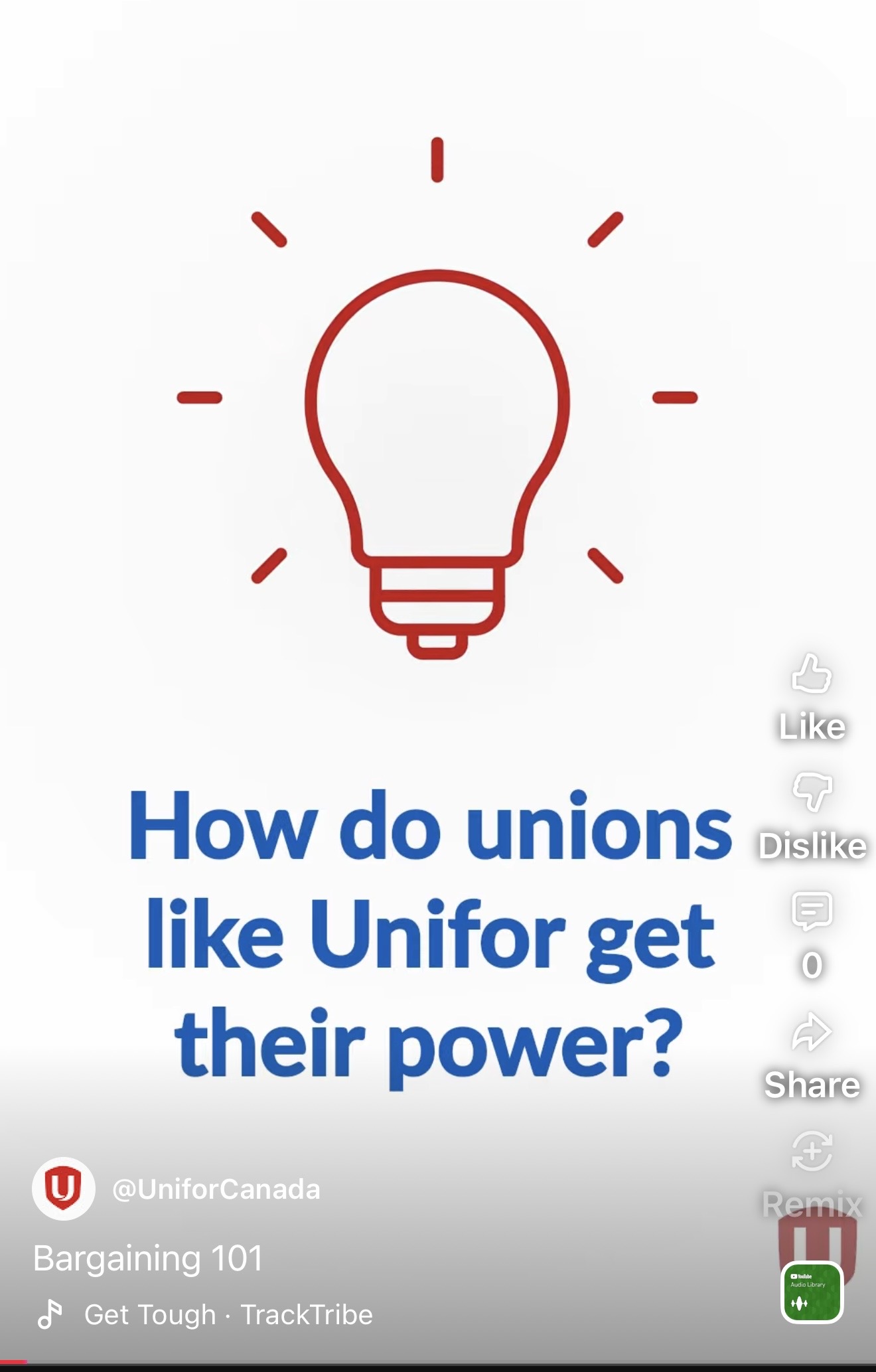
The short video below provides a helpful overview of what collective bargaining looks like in practice and how the process works once workers are certified.
(Click image to watch)
In solidarity,
Unifor Organizing Team
Billy O'Neill
Unifor National Representative, Organizing
416.605.1443
billy.oneill@unifor.org
Lucy Alessio
Unifor National Coordinator, Organizing
416.998.3189
lucy.alessio@unifor.org
Don’t wait—click here to sign your card today!